
01 · Explore
Overview
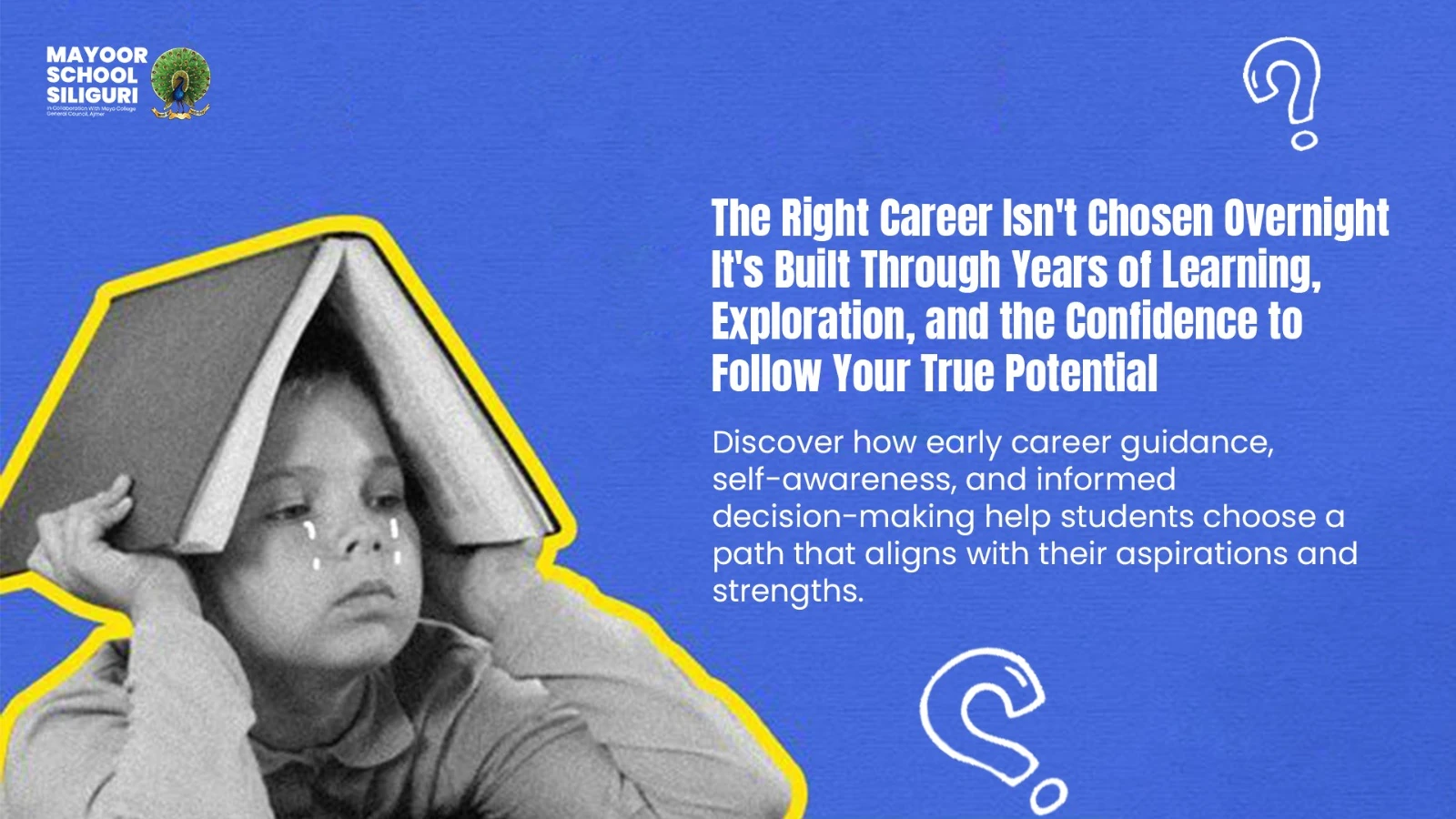
Finding the Right Career Path: Why Early Guidance and Exploration are Key to Unlocking Your True Potential
"So, what are you doing after boards?"
If you've been around a Class 12 student in the last few months, you've probably heard this question thrown around a dozen times a day, in a dozen different tones — sometimes casual, mostly panicked. Some kids already have three-year plans on a spreadsheet. Others are messaging an older cousin at 11pm asking how engineering actually is. And a fair few are just going along with whatever their two closest friends picked, mostly because it feels safer not to be figuring this out alone. Engineering, medicine, commerce, law, design, hotel management, media — the list only seems to be growing. What isn't growing at the same pace is anyone's confidence in actually picking from it.
For most students, Class 12 doesn't feel like an ending so much as the moment the ground shifts a little. There's a course to pick, an entrance exam looming, and this vague, slightly unfair feeling that whatever gets decided now will somehow define the next forty years (it won't — though nobody really says that out loud at seventeen). And without proper career guidance after Class 12, a lot of students end up choosing something because it's trending, because a friend picked it, or because it came up once at a family dinner and nobody bothered arguing.
It really doesn't have to go this way. And this is where having some structure actually helps.
02 · Explore
Why Career Guidance After Class 12 Starts Before Class 12
There's a common assumption that career planning kicks in only after board exams get over. It doesn't, though. It starts way earlier — usually without anyone even noticing it's happening.
School was never just textbooks and marks, even if it feels that way at 11pm over a chemistry chapter you don't understand. It's where kids first begin figuring out who they are — what grabs their attention, what they're unexpectedly good at, what they care about even when nobody's grading it.
A science experiment that suddenly makes something click. A debate where a quiet kid realises they actually enjoy arguing (politely, mostly). A cricket match. A school play. A coding club that meets on a Saturday for absolutely no marks. None of it feels like "career planning" while it's happening — it's just Tuesday. But stack these moments up over ten or twelve years, and somewhere along the way they quietly turn into the foundation everything else gets built on.
When schools give students room to explore across different areas — instead of boxing them into "science" or "commerce" by Class 9 and moving on — the Class 12 decision stops feeling like jumping off a cliff. It starts feeling almost expected.
Uncover your unique talents and interests to make informed career choices, rather than just following marks.
03 · Explore
Why Figuring Yourself Out Matters
No two kids are wired the same, which sounds obvious right up until you watch a school run every student through the same syllabus and expect the same outcome from all of them.
One student genuinely enjoys solving equations for fun — yes, these people exist, somehow. Another only feels like themselves on a stage, or with a paintbrush, or scribbling something in a notebook that turns out, unexpectedly, to be pretty good. Some are quietly obsessed with how apps and machines work under the hood. Others are already negotiating better pocket money deals than most working adults manage in salary talks.
A decent school gives each of these kids a real shot at bumping into their "thing" before anyone forces a five-year decision on them they never really signed up for.
And here's where something shifts: a student who's had space to explore stops asking "which course should I pick" and starts asking "which of these actually feels like me." Small change in wording. Big difference in how the decision gets made.
04 · Explore
The Stuff You Don't Learn From a Textbook
Marks matter, sure, nobody's arguing otherwise. But they stopped being the whole story a while back, if they ever really were it.
What most careers need now is creativity, being able to talk to people without freezing up, some comfort working in a team, quick thinking when a plan collapses, and enough adaptability not to panic when things change on short notice. None of that comes from re-reading an NCERT chapter for the fourth time.
This is where sports, drama club, public speaking, robotics, volunteering, and the general chaos of the annual cultural fest earn their keep. They build a kind of confidence a classroom just can't replicate. And, almost by accident, they help a student figure out what they actually enjoy doing — which makes the "what next" question a lot less terrifying down the line.
05 · Explore
Teachers Notice Things First — Usually Before You Do
Teachers don't get nearly enough credit for this, but they're often the first to spot something in a student before the student's even noticed it in themselves.Maybe it's a teacher pointing out that a kid naturally takes charge during group work. Or one who pushes a nervous student to enter the science fair anyway. Or just a teacher reading an essay and saying, "keep writing, you're good at this." Small moments. They don't always feel like a big deal at the time. But they end up shaping entire career paths more often than people give them credit for.
Career counselling builds on that same idea — giving students a sense of what's actually out there beyond the five careers their relatives keep bringing up, helping them see their own strengths more clearly, and steering decisions toward genuine interest instead of whatever's loudest in the room at the time.
06 · Explore
Parents and Schools Need to Talk to Each Other
Career planning works best when home and school aren't running on separate tracks.
Parents know the version of their kid that shows up at the dinner table — the stubbornness, the interest they won't stop talking about, the things that light them up when nobody's watching. Schools see a different side entirely — how a student learns, where they quietly struggle, where they surprise even their own teachers. Neither picture is complete by itself. Put together, they're actually worth something.
Instead of nudging kids toward whatever career happens to be trending that particular year, it helps a lot more to point them toward fields where they'll genuinely grow — and where they'll actually want to stick around long enough to get good at it.
07 · Explore
Okay, So What Should You Actually Do After Class 12?
All of this groundwork matters, sure — but at some point, a student still has to decide something. So here's a practical starting point if you're standing at that exact crossroads right now, phone in one hand, panic in the other.
Get honest about your interests, not just your marks. Scoring 95 in Physics doesn't automatically mean engineering is your calling. Sit down and actually list what you enjoy doing when no one's checking on you — that list usually says more about your future than your report card ever will.
Research before you commit to anything. Talk to people already working in a field you're curious about. Read about what a normal day actually looks like in that job, not the highlight reel. A lot of students pick a career on the name alone and only discover the day-to-day reality years later, when it's a far more expensive correction to make.
Take an aptitude or interest assessment. A good test won't hand you a final answer, but it can surface patterns you hadn't noticed yourself — strengths in logical reasoning, verbal ability, spatial thinking, whatever it may be. Treat it as one data point, not a verdict carved in stone.
Talk to a career counsellor. Sounds obvious, but very few students actually go do it. A trained counsellor can map your interests against real career paths and entrance requirements, instead of you piecing it together from forwarded WhatsApp messages.
Attend career fairs and exhibitions if you get the chance. These give direct access to colleges, working professionals, and sometimes alumni who've already walked the exact path you're considering. Ten honest minutes there can save months of confusion later.
Try a short internship or shadow programme, even a brief one. Two weeks inside an actual workplace tells you more about a career than a year's worth of secondhand opinions from relatives.
Don't assume you have to pick just one lane. Careers aren't always single-track anymore. A student interested in both biology and technology, for instance, might end up in bioinformatics or health-tech — fields that barely existed as clear options a decade ago.
08 · Explore
A Few Newer Fields Worth Knowing About
Some of the confusion after Class 12 comes from the fact that career options have quietly expanded well beyond the usual engineering-medicine-commerce trio, and most families simply haven't caught up with that yet. A few worth glancing at, especially if the traditional options don't excite you much:
- Artificial Intelligence & Machine Learning — building and training systems that learn from data, now touching almost every industry in some form
- Data Science & Analytics — turning raw numbers into decisions, relevant across finance, healthcare, retail, you name it
- Aviation — pilot training, aircraft maintenance engineering, airport and airline operations
- Hotel & Hospitality Management — a much wider field than most students assume, covering hotel operations, event management, and culinary careers
- Space Technology — with India's space sector growing steadily, aerospace engineering and satellite systems are opening up as real career paths, not just something you read about in the news
- UX/UI and Product Design — shaping how people actually interact with apps and websites
- Environmental Science & Sustainability — increasingly in demand as industries shift toward greener operations
- Cybersecurity — protecting systems and data, growing fast as more of daily life moves online
None of these have to be "the" answer for every student reading this. The point, really, is just that the map is bigger than what usually gets discussed over dinner — and it's worth a glance before defaulting to whatever feels familiar.
09 · Explore
A Real Foundation Makes for Calmer Decisions
Choosing a career was never really about grabbing whichever course has the best reputation that particular year. It's about knowing yourself well enough to make a call you won't regret two years down the line.
Students who spend their school years actually trying things, picking up real skills along the way, and getting some honest guidance tend to arrive at Class 12 noticeably calmer than everyone else scrambling around them. Not because they've got it all figured out — nobody does at seventeen, not really — but because they're not starting completely from scratch.
Career planning isn't something you wrap up in a fortnight between two exams. It builds quietly, in the background, for years, whether anyone's paying attention to it or not.
10 · Explore
Final Thoughts
The best career choice isn't always the most popular one — it's the one that actually matches your interests, strengths, and long-term goals. Start exploring early, ask the uncomfortable questions, talk to people who know more than you do, and remember that choosing a career is a journey, not a single decision made in a hurry between two exam papers.
Career guidance after Class 12 matters, no doubt. But so does everything that leads up to that moment. Between now and then, there's plenty you can actually do — explore your interests honestly, research your options properly, speak to a counsellor, and stay open to fields you haven't even considered yet. That's really how "What should I do after Class 12?" slowly turns into "I already know."
The Importance of Sports in Student Life
Top School in Siliguri: 10 Qualities Every Parent Should Look For